
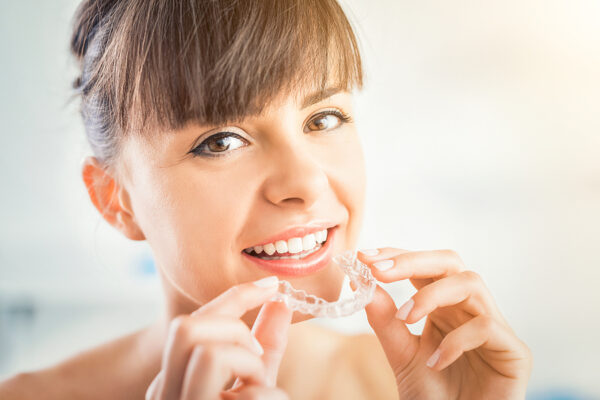
In recent years, Invisalign has become a popular alternative to traditional braces, but despite its rise in popularity, there are still a lot of misconceptions surrounding this clear aligner treatment. At Dahar Orthodontics, we’re here to help you separate fact from fiction and guide you on the best option for your smile.
Myth 1: Invisalign Only Works for Minor Cases
Truth: Invisalign is far more advanced than most people think.
When Invisalign was first introduced, it was mainly recommended for mild to moderate cases of crowding or spacing. But today, with modern orthodontic technology and digital treatment planning, Invisalign can effectively treat complex cases including overbites, underbites, crossbites, and even severe crowding.
Orthodontists now use precision attachments, digital scanning, and 3D treatment simulations to achieve results comparable to braces. In many cases, Invisalign can deliver even more predictable tooth movement with less discomfort.
Myth 2: Braces Are Faster Than Invisalign
Truth: Treatment time depends on your case, not the method.
Many patients believe that metal braces work faster. However, Invisalign uses SmartTrack® material and computer-generated precision to move teeth efficiently and consistently.
For most patients, Invisalign treatment takes about 6 to 18 months, which is similar to — or even shorter than the average time for braces.
The key factor is compliance wearing your aligners for the recommended 20–22 hours per day ensures faster, predictable results.
Myth 3: Invisalign Is More Expensive Than Braces
Truth: Invisalign and braces are often priced similarly.
A common misconception is that Invisalign costs significantly more than braces. While prices can vary depending on complexity and location, most orthodontic practices now offer Invisalign at a comparable or only slightly higher cost.
When you consider the comfort, convenience, and fewer clinic visits, Invisalign provides exceptional long-term value. Plus, many orthodontists offer flexible payment plans, insurance coverage, and financing options that make it affordable for every patient.
Myth 4: Invisalign Doesn’t Work for Teens
Truth: Invisalign Teen is designed specifically for young patients.
Teenagers often worry that they might lose their aligners or forget to wear them but Invisalign thought of that, too! Invisalign Teen includes special features like wear indicators (that fade with use) and replacement aligners in case one gets lost.
It’s an ideal choice for teens who want to maintain their confidence during school events or sports, as the clear aligners are nearly invisible and comfortable to wear — without dietary restrictions.
Myth 5: Braces Give Better Results Than Invisalign
Truth: Both can achieve excellent results when monitored by an experienced orthodontist.
The success of any orthodontic treatment depends on your orthodontist’s expertise and personalized treatment planning. Invisalign can deliver equally precise results as braces when handled by professionals trained in digital orthodontics.
Braces might still be preferred for certain complex jaw movements, but Invisalign offers the added advantages of:
-
Better oral hygiene (since you can remove aligners to brush and floss)
-
No food restrictions
-
Greater comfort and aesthetics
-
Fewer emergency appointments for broken wires or brackets
Ultimately, it’s not about which method is better — it’s about which method is better for you.
FAQs About Invisalign
Q1: How often should I wear my aligners?
Aligners should be worn for 20–22 hours per day to ensure optimal results. Remove them only for eating, drinking (anything other than water), and brushing or flossing.
Q2: Can Invisalign treat severe bite issues?
Yes. Modern Invisalign systems can correct complex bite problems, though severe cases may still benefit from combination treatment guided by your orthodontist.
Q3: Will Invisalign affect my speech?
You might notice a slight lisp during the first few days as you get used to wearing aligners. This quickly disappears as your mouth adjusts.
Q4: How do I clean Invisalign aligners?
Rinse aligners under lukewarm water and gently brush them with a soft toothbrush. Avoid hot water, which can warp the material. Specialized Invisalign cleaning crystals can also keep them clear and odor-free.
Q5: Can teenagers use Invisalign?
Absolutely. Invisalign Teen is specifically designed for younger patients and includes features like wear indicators and space for growing molars.
Q6: What happens after Invisalign treatment?
After completing treatment, you’ll need to wear a retainer to maintain your new alignment. Your orthodontist will recommend a schedule to keep your smile perfectly straight.
Conclusion: Your Smile, Your Choice
Invisalign has proven to be one of the most effective, comfortable, and discreet ways to achieve a straighter smile. Myths about its limitations, discomfort, or cost often prevent people from exploring this transformative treatment but the facts tell a different story.
If you’re ready to discover whether Invisalign is right for you, schedule a consultation with Dahar Orthodontics, the trusted orthodontic practice in Irwin, PA. Experience personalized orthodontic care powered by advanced technology and expert hands designed to give you a confident, beautiful smile that lasts a lifetime.
Book your appointment today and take the first step toward a better smile with Dahar Orthodontics — your local expert in Invisalign and advanced orthodontic care.